

A Defibrillator, a Death Sentence, and the Faux Ethics of State Killing
Nashville General Hospital never agreed to help with execution, the state plans to move ahead regardless

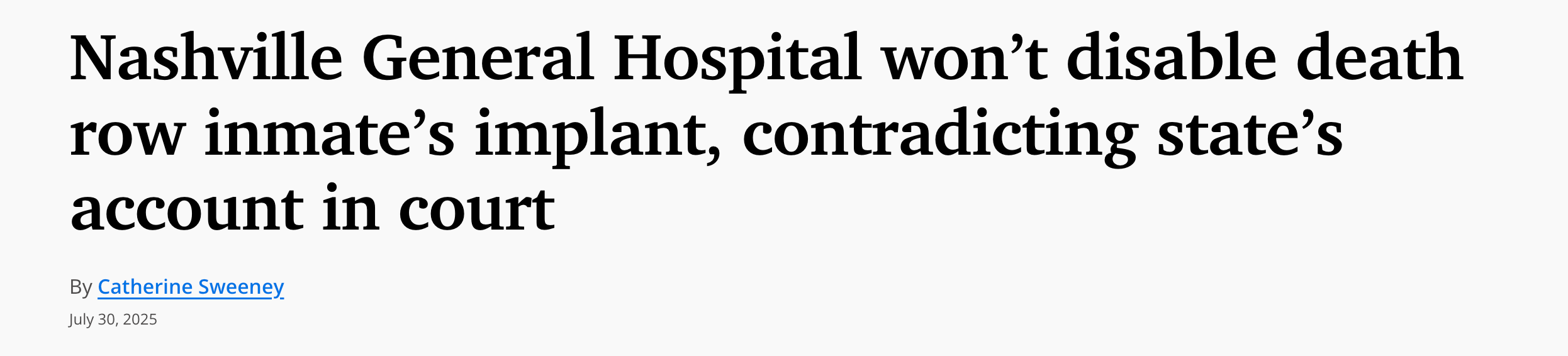
Nashville General Hospital says it never agreed to turn off 69-year-old Byron Black’s defibrillator. It appears the State of Tennessee assumed that Nashville General would facilitate the deactivation since its physicians refused to do so at the prison.
Participating in an execution is a clear violation of the American Medical Association Code of Ethics. The code specifically calls out any treatment that would “contribute to the ability of another individual to directly cause the death of the condemned.”
Tennessee’s Plan to Execute Byron Black Despite Cardiac Device
Unfortunately, on Thursday, August 1, 2025, the Tennessee Supreme Court overruled a lower court that required the device to be turned off prior to execution. The court stated that delaying the execution due to an inability to get Black’s device deactivated amounts to a “stay of execution” that they didn’t have the authority to authorize. The irony of this argument, when Black was sentenced to death in 1988, is not lost on me.
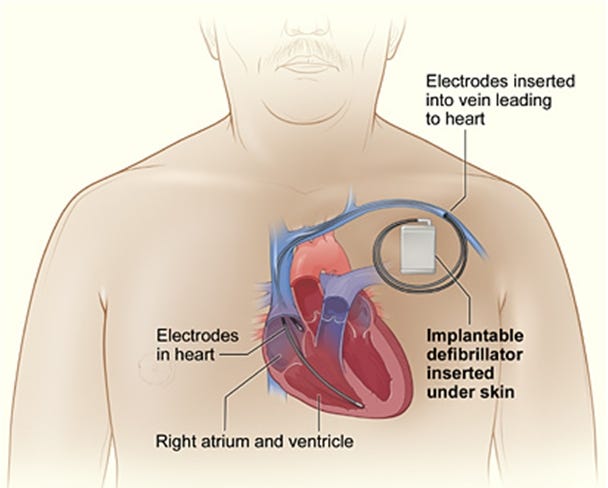
This is legal mumbo jumbo to facilitate state-sanctioned killing by lethal injection. In Black’s case, as he dies, his device will do what it has been designed to do and attempt to shock his heart back into a regular rhythm. We should expect that he will be shocked multiple times during the execution. Not only will these shocks be extremely painful, they will likely also make his death last longer than if the device were turned off.
In America, approximately 150,000 automated implantable cardioverter-defibrillators (AICDs, or ICDs) are placed each year, both to prevent and treat fatal cardiac arrhythmias.
By preventing sudden cardiac death, ICDs keep patients alive longer than they would live otherwise. However, being shocked is incredibly unpleasant. For some patients, it’s extremely painful and stressful. Many such patients develop anxiety disorders, panic attacks, and PTSD related specifically to the risk of enduring another shock.
Tennessee Executions on Hold 2022-2025
In 2022, thirty minutes before the execution of Oscar Smith, the governor stopped the execution and put remaining executions on hold due to the facility’s failure to test the chemicals for bacterial endotoxins. (So we have evidence the TDOC doesn’t care about basic drug management.) He then opened a third-party investigation. Due to lawsuits related to Tennessee’s previous three-drug execution protocol and the internal review, the state moved to a single-drug protocol using only pentobarbital.
The state began executing prisoners in May of this year, beginning with Mr. Smith.
Pentobarbital and Pulmonary Edema
Thiopental used to be a commonly used drug in the ICU for sedating critically ill patients. Increasingly, companies were not willing to sell the barbiturate to prisons for executions, and by 2017, pentobarbital was nearly impossible to access. In 2011, the European manufacturers of thiopental began refusing to sell it in the US because of its diversion for executions. After its introduction in 2010, pentobarbital became the single drug most commonly used in executions. States moved to using combinations of drugs resembling anesthetics - high doses of sedatives (such as midazolam) and paralyzing medications (such as pancuronium or vecuronium bromide - used commonly in surgery to temporarily ensure muscle movement doesn’t negatively impact surgery). The third drug used was potassium chloride. In proper doses, potassium can be used to correct metabolic imbalances. It is an extremely high-risk medication because, at high doses, one can rather easily put a patient into cardiac arrest1.
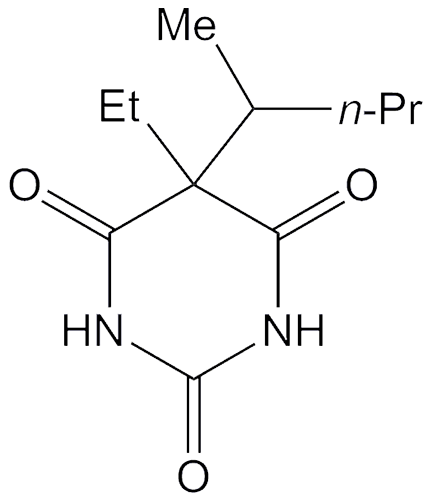
However, the ability to procure pentobarbital for executions has increased, and states like Tennessee are using it again. A 2020 review of the autopsies of executed individuals by lethal injection revealed that death by pentobarbital was likely not as “humane” as legislators and death penalty advocates claim. When anesthesiologist Dr. Zivot was asked to review the levels of sedative to determine if the executed man was likely to have been conscious as he died, he noticed something else - the lungs were far too heavy.
The review showed that prisoners had suffered massive pulmonary edema - a known complication of pentobarbital toxicity. The exact way that pentobarbital causes non-cardiogenic pulmonary edema isn’t known, but it is suspected to be due to increased permeability of the alveolar-capillary membrane. More permeability means more fluid can leave the body’s tissues and enter the air sacs of the lungs. This fluid in the lungs has weight, showing that at death, these executed people had lungs weighing approximately two times more than a typical lung.
Pulmonary edema is very unpleasant - many patients with heart failure learn to recognize the signs of chest discomfort and breathlessness.
Cruel and Unusual: ICD Shocks During Execution
Incarcerated people deserve healthcare - just like everyone else. There is a weird and cruel irony in Mr. Black’s case that in receiving common cardiac care for his heart condition, that his execution will likely be even more cruel and unusual. There are people in the government who would prefer money not be spent preventing and treating the illnesses and ailments of incarcerated people. After all, executions are profoundly expensive. The Tennessee Department of Corrections (TDOC) spent around $600,000 on lethal injection drugs since 2017. During this time period, two people were executed by lethal injection. If the state cares about basic drug safety issues, I expect most, if not all, of these drugs have expired or will very soon.
With his heart potentially beating longer than expected due to being shocked back into rhythm, I suspect Mr. Black will be at even greater risk of not only developing pulmonary edema, but also remaining conscious of the experience of both being shocked and drowning in his own edema.
The False Justice of Executions
My categorical opposition to the death penalty is too multifaceted to spell out here. But at its core, the idea that the state should use state power to kill people who committed heinous crimes makes no sense. Black did terrible things, murdering his girlfriend and her two young children. His death will not change that. His death will not make anyone safer.
Execution is already absurdly unethical. To move forward with an execution despite knowing that Black is likely to be continuously shocked as he dies is especially cruel.
Yet, the current president released an Executive Order shortly after taking office, promising to increase the use of the death penalty and to penalize judges and activists who attempt to prevent it.
For me, it’s terrible to imagine what it must be like to die by execution. I know what it’s like to hold a syringe and inject medications that sedate. Even more terrible to imagine the use of drugs that have medical uses to be used to kill someone, and worse yet with the risks of cardiac shocks and pulmonary edema. I encourage us all to do the imagining, especially now, as Mr. Black, a human being, is poised to be killed by the state. If we are unwilling to imagine the horrors of execution, we cannot be ready to imagine a better world where we do not resort to such inhumane acts.
As of a few minutes before I post this, Governor Bill Lee has refused to intervene to stop Black’s death. He will be executed tomorrow at 10 am.
During liver transplants, I meticulously monitor and manage the patient’s potassium levels. Before being implanted in a new patient, transplant organs are preserved using ice and a special fluid that contains a large amount of potassium. Without careful management, the risk of death when the new organ is reperfused is significant.